From Color-Coded Chaos to Scheduling on Autopilot
How ASLA's Education Manager Stopped Scheduling by Hand — and Started Programming by Design
American Society of Landscape Architects (ASLA)
Whitney Mitchell, ASLA's Senior Manager of Professional Development, had 109 concurrent sessions, 11 rooms, 24 field sessions, three days and a parking lot full of buses to fill. She also had a wall full of hand-cut, color-coded session labels and two days set aside to make sense of the scheduling chaos.
109
Sessions
Scheduled
24
Field Sessions
Coordinated
11
Rooms
3-day
Conference
13
Speaker Conflicts
Resolved
~90%
Schedule Generated
Automatically
The Challenge
Every year, Whitney manages the education schedule for ASLA's annual conference — over 100 sessions across multiple days, rooms, and tracks, plus dozens of off-site field sessions with their own logistics.
Her process worked. But it was entirely manual.
It started with a mail merge: every accepted or maybe proposal became an address label — session title, speaker names, score, committee decision — printed on colored paper, one color per track. Then she'd cut them out, carry them to a wall, and start arranging.
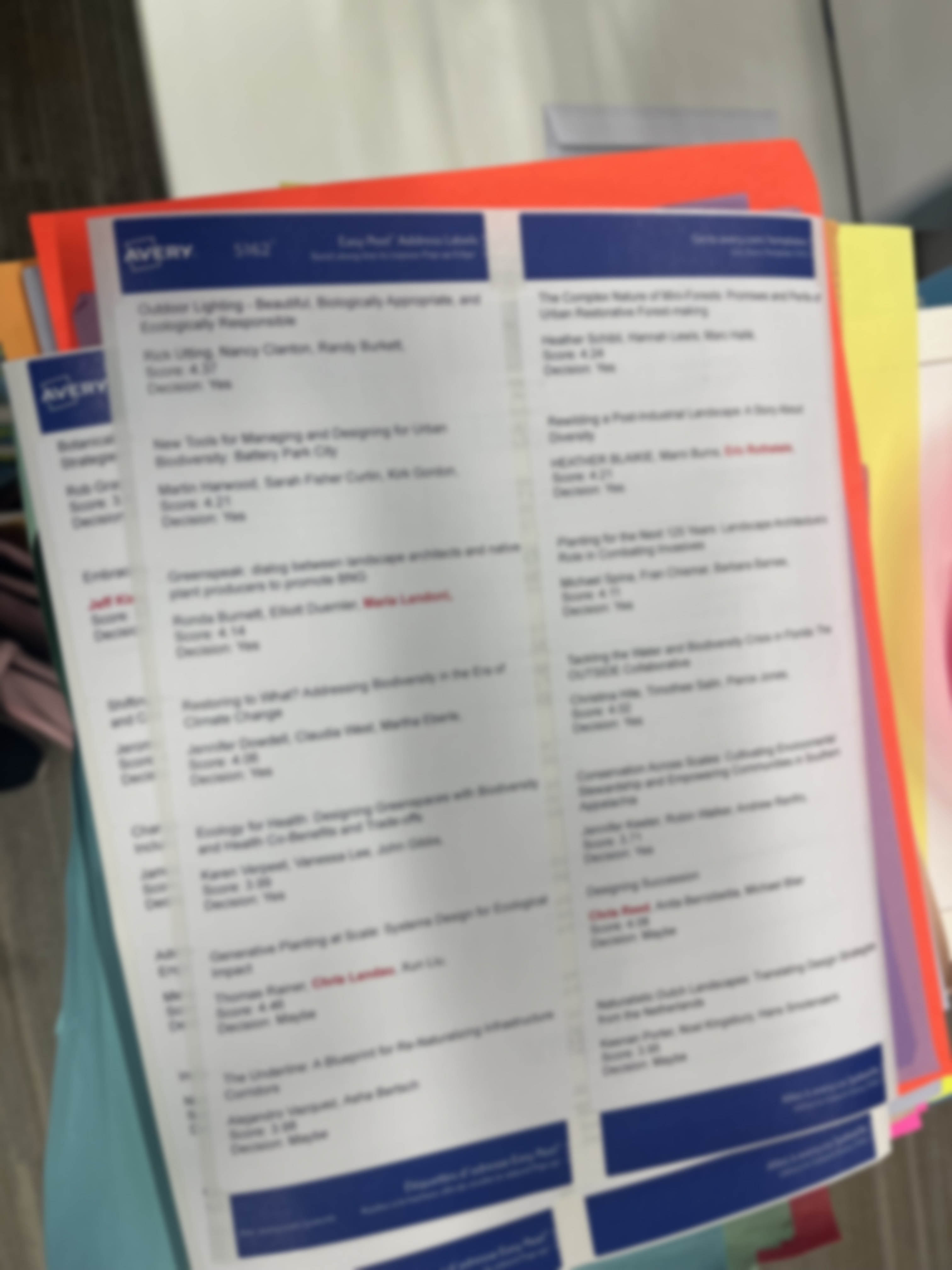
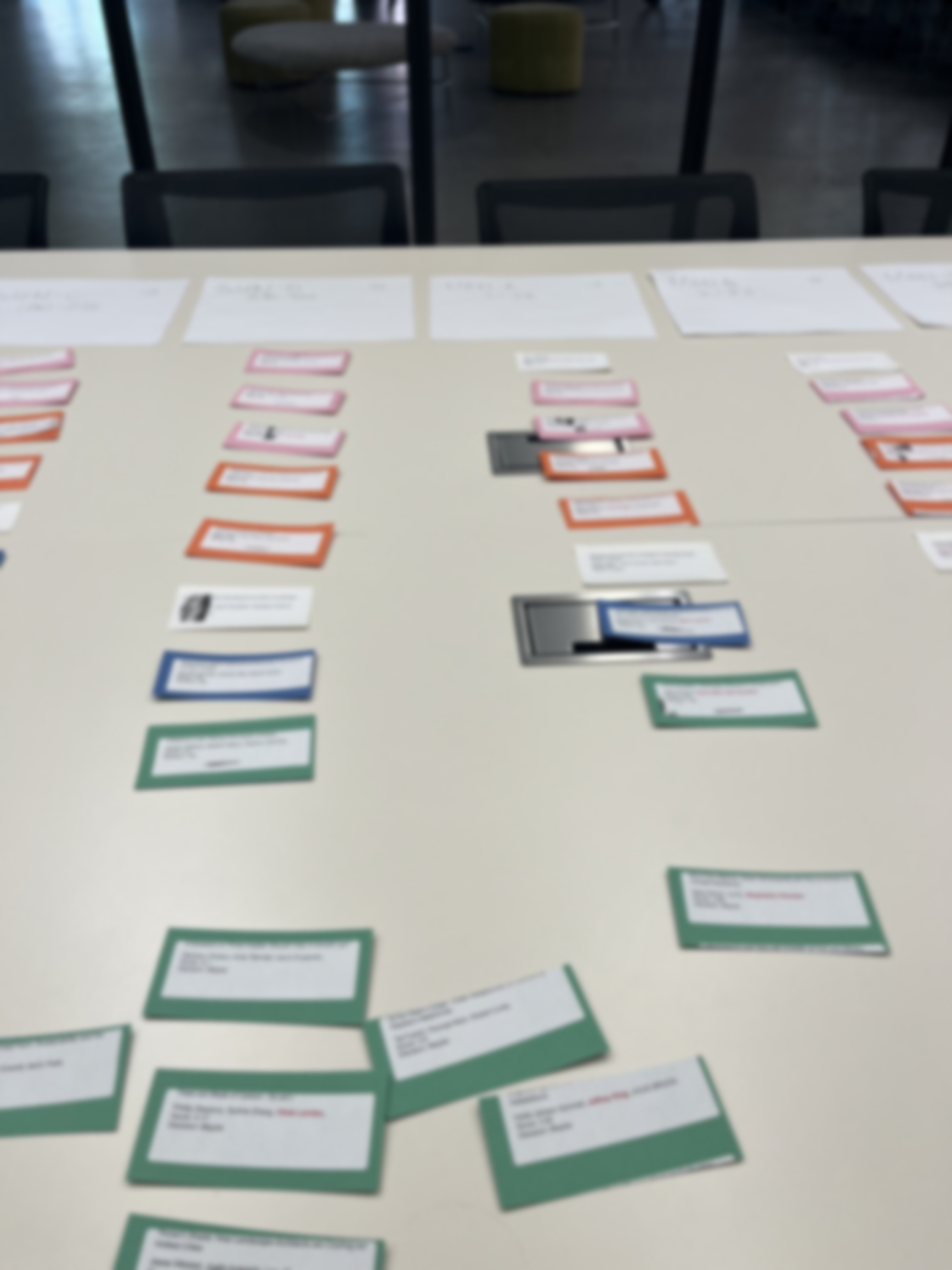
The wall worked. It let her see conflicts, balance tracks, and spot problems. But it took hours to set up and multiple days to get right…and every change meant physically moving cards around. And the real cost wasn't just the time spent arranging labels. It was the mental overhead: so much energy went into the logistics of placing sessions that there was less left for the harder question of whether the content was right.
The Approach
Whitney sent over her session data and constraints, and the EventEdIQ team handled the rest: importing sessions, configuring rooms and time slots, and translating her scheduling requirements into the system. The constraints that shaped the schedule:
- No speaker conflicts — speakers couldn't be scheduled against themselves
- Track separation — sessions on similar topics couldn't run in the same time slot
- Geography separation — regionally focused sessions spread across different slots
- Field session coordination — education sessions couldn't conflict with a speaker's off-site field session
- Speaker pacing — no presenter scheduled more than once per day
The OperationsIQ Schedule Optimizer ran and produced a full draft schedule in seconds.
Whitney reviewed it, spotted the 10% that needed her judgment — the nuanced content decisions that only someone who knows the program can make — and adjusted from there.
"I found the scheduler very helpful. It got me about 90 percent of the way there by laying out a schedule that fit my parameters. The remaining 10 percent required my own knowledge of nuances that AI wouldn't have."
What Changed
The shift wasn't just from slow to fast. It was from reactive to strategic.
Before, Whitney's process was necessarily hands-on: printing, sorting, and arranging sessions on a wall to map the schedule and check for conflicts. It was a thoughtful, detail-oriented approach, but one that naturally centered most of the effort on building the schedule itself, leaving less time to step back and shape the program as a whole.
With the scheduler handling constraint satisfaction and room assignment automatically, Whitney could skip straight to the work that actually requires a human: evaluating content fit, balancing audience needs across time slots, and making the kinds of editorial calls that shape what attendees experience.
"It saved countless hours of preparation and scheduling…which meant I could spend more time on the quality and balance of the content itself."
The Result
Whitney got her conference program — but more importantly, she got her time back. And she didn't spend it on something administrative. She reinvested it in the quality of the programming.
That's the part that matters most. The labels and the wall and the colored paper weren't the problem. They were a symptom of a process where logistics crowded out strategy. When the logistics moved to software, what was left was the work Whitney actually wanted to be doing: fine tuning the content to ensure it is exactly what her audience wants.
Why It Matters
Conference scheduling is one of those tasks that looks simple from the outside — put sessions in rooms — but anyone who's done it knows the reality. Hundreds of sessions. Dozens of constraints. Speakers who appear multiple times. Tracks that compete for the same audience. Field sessions with bus departures that ripple through the rest of the grid.
Most planners manage this with spreadsheets, sticky notes, or, in Whitney's case, hand-cut labels on a wall. It works. But it doesn't scale, and it consumes time that could be spent on higher-value decisions.
The question isn't whether a planner can do it manually. It's what they'd do with those hours if they didn't have to.
"Not only was it a time and resources savings, not only did it balance her sessions in an optimized way, but the extra benefit is what she did with that time — and that was reinvesting it in her content."
Ready to stop scheduling by hand?
We'll show you what it looks like when your constraints are handled in seconds — so you can focus on content.
Book a CallAbout EventEdIQ
EventEdIQ builds simple, affordable tools for event and association teams. OperationsIQ's Schedule Optimizer turns sessions, rooms, and constraints into conflict-free schedules in minutes — so planners spend less time in the weeds and more time improving their events.